Why Is My AC Running But Not Cooling My Clayton Home?

Written by the Flaming Ice Heating & Cooling team
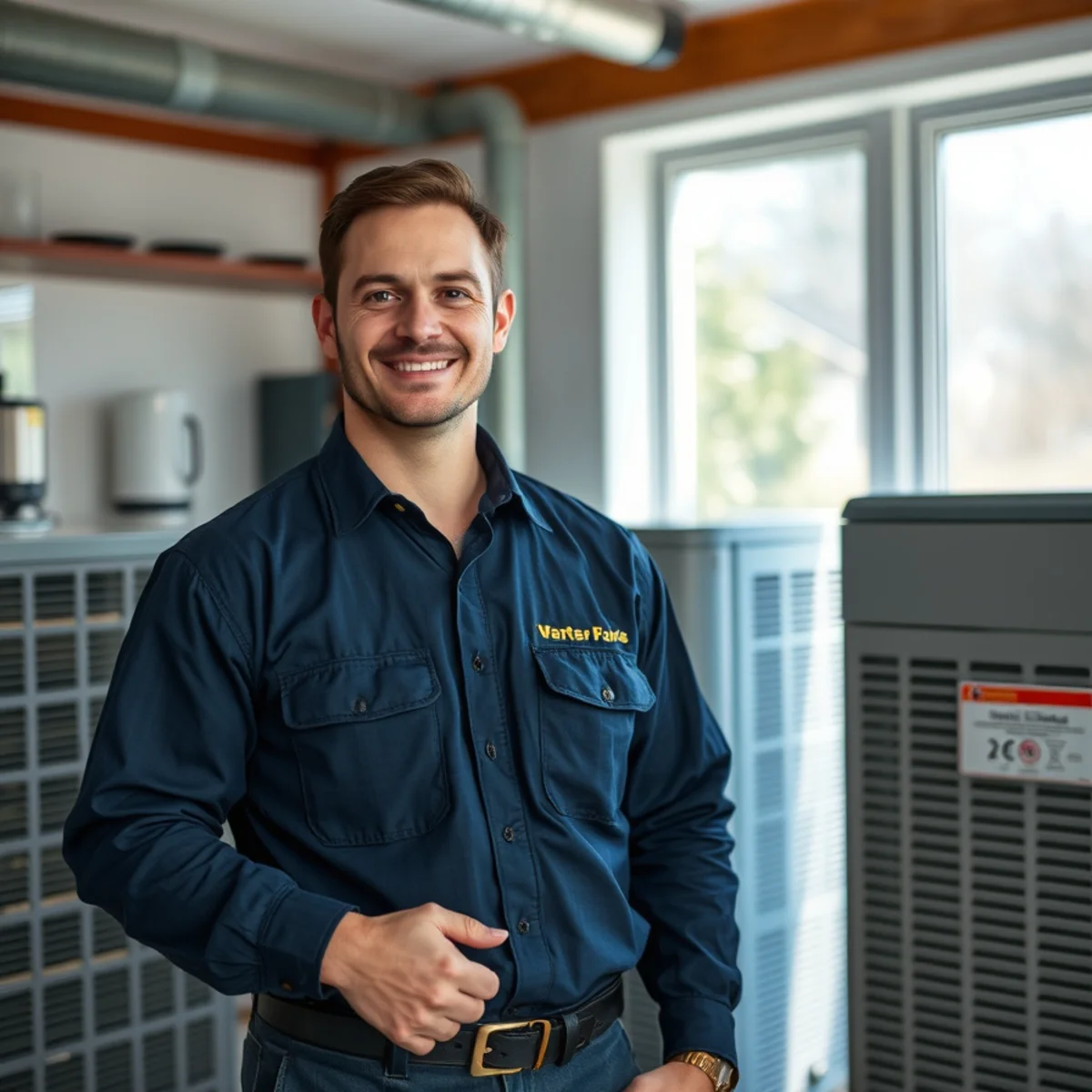
Owner-operated HVAC pros led by Travis, serving Clayton and North Carolina homeowners with honest, hands-on heating and cooling experience. Questions about your system? Call (327) 210-5999.
It's one of the most frustrating things a homeowner can run into on a July afternoon. The air conditioner is clearly on — you can hear it humming, the thermostat says it's cooling — but you walk through the house and it's just not getting cold. On a sticky 95-degree day in Clayton, that gap between "running" and "actually cooling" can turn your home miserable fast.
The good news is that there is almost always a specific, findable reason. Some causes you can check and even fix yourself in a few minutes. Others need a trained technician and the right tools. This guide walks through the usual suspects in the order a good tech would check them — simplest first — so you understand what's happening before you ever pick up the phone, and so you know which problems are safe to tackle yourself.
First, Set Realistic Expectations for a Carolina Heat Wave
Before assuming your system is broken, it helps to know what a healthy AC can and can't do. A central air conditioner is generally designed to pull your indoor temperature down about 15 to 20 degrees below the outdoor temperature — no more. So when it's 100 degrees outside and your house is sitting at 80, your system isn't failing. It's doing exactly what it was engineered to do.
Most residential systems are sized to keep up comfortably when it's under roughly 93 degrees out. Push past that during one of our Triangle heat waves and even a perfectly healthy unit will run nearly nonstop and may drift a few degrees above your setpoint. That isn't a malfunction — it's physics.
There's a second, sneaky factor here too: humidity. Your AC doesn't just lower the temperature, it wrings moisture out of the air. On a muggy North Carolina day, a room set to 74 can still feel sticky and warm if your system is struggling to keep up with the moisture load. If your house feels clammy even when the thermostat reads fine, that's a humidity clue worth mentioning when you call.
So: if your home is staying within about 20 degrees of a brutal outdoor temperature, your AC is probably fine and just working hard. If the gap is much bigger than that — or the air coming out of the vents is plainly warm — keep reading.
Start With the Easy Stuff
You'd be surprised how often the fix is something simple you can handle in five minutes.
1. Check the Thermostat
It sounds obvious, but confirm it first. Make sure it's set to COOL (not heat or fan-only) and the fan is on AUTO, not ON. Here's the catch most people miss: with the fan set to ON, it blows constantly even when the system isn't actively cooling — so you feel air moving across your skin, but it's just room-temperature air. That alone convinces a lot of homeowners their AC has died. Switch it to AUTO, drop the setpoint a few degrees, and listen for the outdoor unit to kick on.
While you're there, if it's a battery-powered thermostat that's gone dim or blank, fresh batteries are a genuinely common fix.
2. Check Your Air Filter
This is the single most common cause we see, and the easiest to fix. A clogged filter chokes off the airflow your system needs to move heat. When air can't move freely across the indoor coil, two bad things happen at once: your cooling falls off a cliff, and the coil can actually freeze into a block of ice (more on that next). Here in Clayton, our heavy spring and early-summer pollen clogs filters far faster than the "every 90 days" line on the box. Pull yours out and hold it up to the light. If you can't see through it, replace it. This one change resolves a surprising number of "not cooling" calls.
3. Check the Outdoor Unit
Walk outside to the condenser — the big box with a fan on top. Is that fan spinning? Is the unit choked with grass clippings, leaves, mulch, or weeds? That outdoor unit's whole job is to dump your home's heat outside, and if it's smothered or the fan isn't turning, the heat has nowhere to go. Clear at least a couple of feet of breathing room around it, and if the fins look caked with pollen and dirt, gently rinse them from the outside with a garden hose (never a pressure washer). If the fan isn't spinning at all, that points to an electrical issue — covered below.
When It's a Frozen Coil
Here's a counterintuitive one that catches people off guard: an AC that's too iced over won't cool. When airflow is restricted (often from that dirty filter) or refrigerant is low, the indoor evaporator coil can drop below freezing and build up a solid block of ice. Once that happens, air can't pass through it, and you get little to no cold air even though everything is running and your bill is climbing.
Signs of a frozen coil include weak or nonexistent airflow from the vents, visible ice or frost on the copper lines, and water pooling around the indoor unit as the ice slowly melts.
If you suspect a frozen coil, turn the cooling off and switch the fan to ON to help it thaw. Give it several hours — overnight is even better. Then replace the filter and try cooling again. If it freezes up a second time, that usually points to low refrigerant, and that's a job for a technician, not a DIY fix.
When It's Low Refrigerant
Refrigerant is the substance that actually carries heat out of your home, and here's the part most people don't realize: your AC doesn't burn through refrigerant the way a car uses gas. If it's low, you almost certainly have a leak. Telltale signs include warm air at the vents, ice on the copper lines, a faint hissing or bubbling sound, and a system that runs constantly but never quite reaches the set temperature.
Refrigerant work is not a DIY project — it requires proper recovery equipment, EPA certification, and leak-detection tools. And simply "topping it off" without finding the leak just sends your money right back out the same hole, often within a season. A proper repair means locating the leak, sealing or replacing the failed part, and recharging the system to the manufacturer's exact spec. Our AC repair team handles this every week, and we'll show you what we find rather than just handing you a bill.
When It's a Dirty Condenser Coil
We mentioned clearing debris from the outdoor unit, but the coil itself can also collect a fine, packed layer of dirt and pollen that you can't simply rinse off. When that outdoor coil is coated, it can't release your home's heat efficiently, so the system runs and runs while barely cooling. After a long, dusty Clayton summer, condenser coils take a real beating. A professional coil cleaning during a tune-up restores their ability to shed heat — one of several reasons regular HVAC maintenance genuinely pays for itself in lower bills and fewer breakdowns.
When It's an Electrical or Capacitor Problem
Sometimes the indoor blower runs fine but the outdoor unit sits dead — so you're circulating air without actually cooling it. A few things cause this:
- A failed capacitor. This small cylindrical part gives the compressor and fan motor the jolt they need to start. Capacitors fail more often in extreme heat — exactly when you need cooling most. A humming or buzzing outdoor unit with a fan that won't spin is a classic bad-capacitor symptom.
- A burned or stuck contactor. The contactor is the electrical switch that powers up the outdoor unit on a cooling call. Over time its contacts can pit, stick, or fail.
- A tripped breaker. A tripped breaker on the AC circuit can stop the outdoor unit while the indoor blower keeps running.
You can safely reset a tripped breaker once. If it trips again right away, stop — do not keep resetting it. A repeatedly tripping breaker means something is drawing too much current, and forcing it can be a genuine fire or shock hazard. Capacitor and contactor replacements should be left to a pro, since these components can hold a dangerous charge even with the power off.
Heat Pump? A Couple of Extra Things to Know
Plenty of Clayton homes run heat pumps, and every cooling-mode problem above applies to them too. But heat pumps have one extra part worth knowing about: a reversing valve that switches the system between heating and cooling. If that valve sticks, or the thermostat sends the wrong signal, your heat pump can blow warm air in the dead of summer. There's also "auxiliary heat" wiring that, if a thermostat is set up wrong, can fight your cooling. If you've confirmed the thermostat is set to cool and you're still getting warm air, our heat pump repair team knows exactly where to look.
A Quick Checklist Before You Call
Having a few details ready helps us diagnose faster and get you comfortable sooner:
- Is the thermostat set to COOL and AUTO? Confirm it, then lower the setpoint a few degrees.
- When did you last change the filter? If you can't remember, it's probably overdue.
- Is the outdoor fan spinning, and is the unit clear of debris?
- Do you see any ice on the indoor coil or the copper lines outside?
- Is the vent air warm, room-temperature, or just weak? That single detail points us in the right direction.
These checks either solve the problem outright or give our technician a big head start.
Don't Tough It Out in the Heat
A North Carolina summer is no time to wait days for a repair, and a struggling AC doesn't just leave you uncomfortable — it runs up your power bill and can let a small problem snowball into a compressor failure. That's why we offer same-day and weekend service for Clayton and the surrounding Triangle communities.
When you call Flaming Ice, you're dealing with an owner-operated local company. Our owner, Travis, and our team treat your home like it's our own: we text before we arrive, we explain what we find in plain English, and we give you honest, no-upsell pricing. If your system is past its prime, we'll tell you that straight rather than nickel-and-diming a unit that's on its last legs.
So run through the easy checks above. If your AC bounces back, great — you just saved yourself a service call. If it doesn't, don't sweat it out. Call Flaming Ice Heating & Cooling at (327) 210-5999, or reach out through our contact page, and we'll get you cool again. For true breakdowns that can't wait, our emergency HVAC service is ready when you need it most.

Need a hand from a local HVAC pro?
Flaming Ice Heating & Cooling offers honest, same-day service across North Carolina. Get a straight answer and a fair price.
Call (327) 210-5999Frequently Asked Questions
The most common causes are a dirty air filter restricting airflow, a frozen evaporator coil, low refrigerant from a leak, a dirty outdoor condenser coil, or a thermostat set to the wrong mode. Keep in mind a healthy AC can only cool about 15 to 20 degrees below the outdoor temperature, so during a Clayton heat wave a small gap may be normal. A few of these you can check yourself; refrigerant and electrical issues need a professional.
Often, yes, at least temporarily. If you suspect a frozen coil, switching the system off and running just the fan helps it thaw safely. If the unit is straining and clearly not cooling, running it nonstop can make some problems worse and run up your bill. Switch it off, check the easy items like the filter and thermostat, and call a pro if it doesn't recover.
Warm air usually points to a refrigerant problem, a frozen coil, a tripped breaker on the outdoor unit, a bad capacitor, or a thermostat accidentally set to heat or fan-only. Start by confirming the thermostat is set to COOL and AUTO. If the outdoor unit isn't spinning, check the breaker once. If air is still warm, you likely have a refrigerant, capacitor, or compressor issue that needs a technician.
Absolutely. A clogged filter chokes off airflow, which makes the system inefficient and can cause the evaporator coil to freeze into a block of ice. Once that coil is iced over, almost no cold air reaches your rooms even though the unit is running hard. Changing the filter is the first thing to check, and during Clayton's pollen-heavy seasons filters clog faster than the box suggests.
Somewhat, yes. Most systems are designed to keep your home roughly 15 to 20 degrees cooler than it is outside and to perform best when it's under about 93 degrees. On extreme days your AC will run nearly nonstop and may drift a few degrees above your setpoint, which is normal. High humidity can also make rooms feel warmer than the thermostat reads. If the temperature gap is much larger than 20 degrees, though, something is likely wrong and worth a look.
Flaming Ice offers same-day and weekend service for Clayton and the surrounding Triangle area. When it's 95 degrees and your home isn't cooling, you shouldn't have to wait days. Call (327) 210-5999 and we'll let you know how quickly we can get to you, and we'll text before we arrive.