
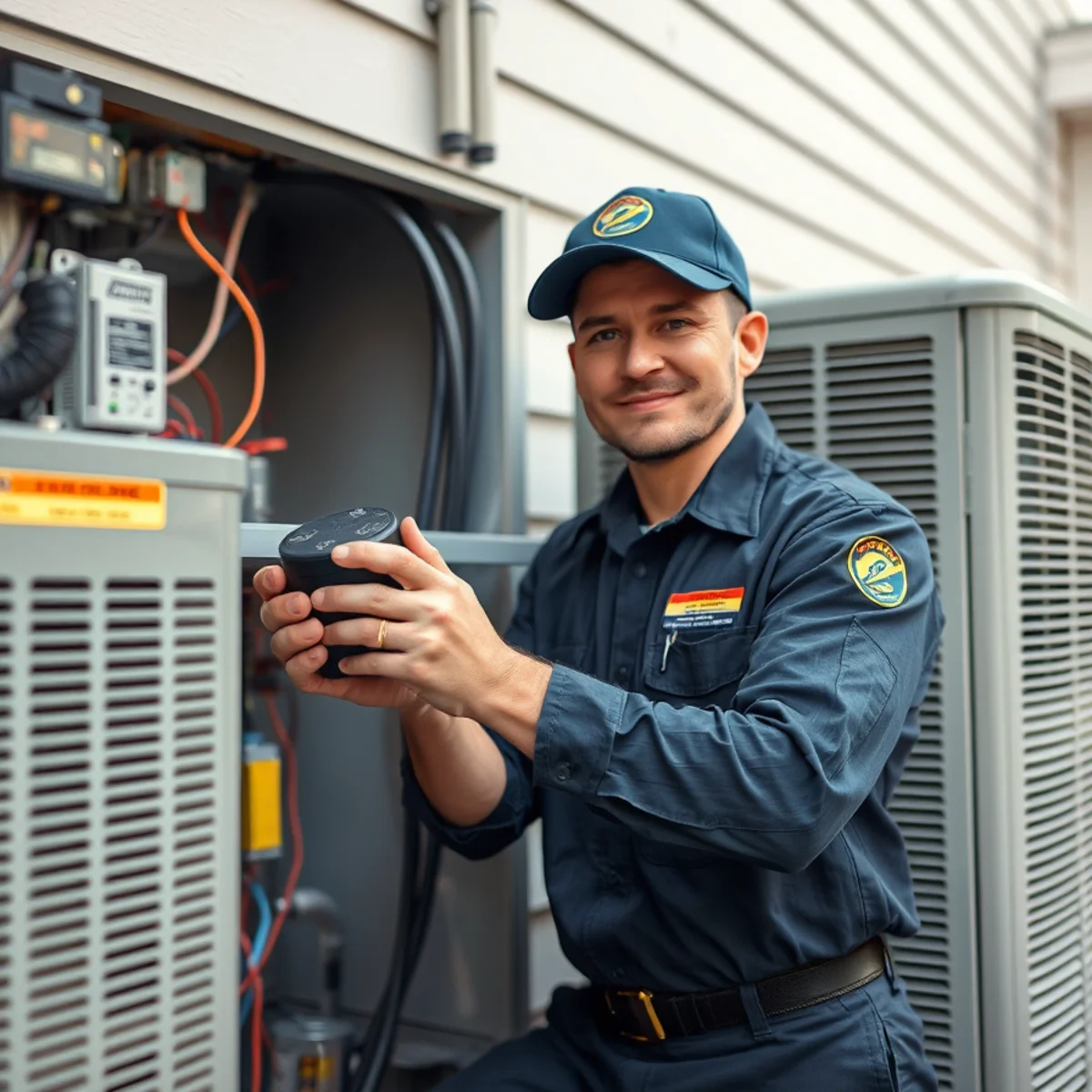
Capacitor & Contactor Replacement
Fast fixes for two of the most common AC failures — the capacitor and contactor that start and run your system.
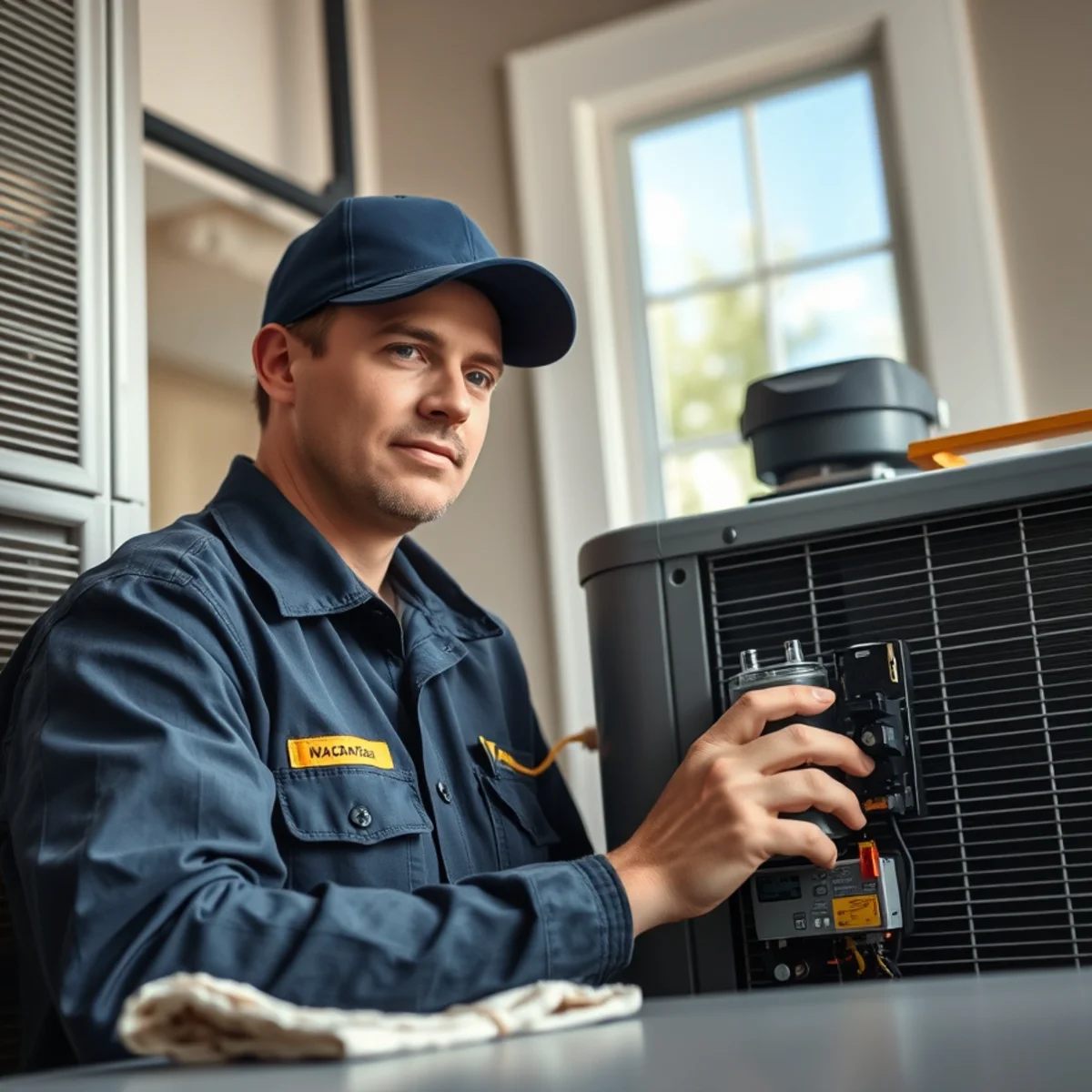
Capacitor & Contactor Replacement
When your air conditioner suddenly goes quiet on a 95-degree Clayton afternoon, the culprit is very often one of two small, inexpensive parts: the capacitor or the contactor. These are the components that physically start and run your system, and when one fails, the whole unit can sit dead in the backyard while your house heats up by the hour.
The good news is that a capacitor or contactor failure is one of the most common and most fixable AC problems we see across Johnston County. Flaming Ice Heating & Cooling specializes in fast, honest diagnosis and replacement, often same-day, so you are not stuck sweating through a North Carolina heat wave.
This page goes deeper than a quick checklist. We will walk you through what these parts actually do, why they fail so often in our climate, how we diagnose the real problem, and what you can expect when our owner-operated team comes out.
Quick Takeaways
- The capacitor and contactor are the small parts that start and run your AC; either one failing can leave your whole system dead while the house heats up.
- An AC that hums but won't start usually points to a failed capacitor, while total silence outside often means a bad contactor, but the two are linked and should be checked together.
- North Carolina's long, hot, humid cooling season and frequent summer storm surges make these the most common AC failures we see in Clayton.
- Most capacitor and contactor replacements are quick, affordable wear-part repairs that Flaming Ice handles same-day with parts stocked on the truck.
- Flaming Ice is owner-operated by lead tech Travis, texts before arriving, offers same-day and weekend emergency service, and prices honestly with no upsell.
What the Capacitor and Contactor Actually Do
Your outdoor condenser unit has two heavy electric motors inside it: the compressor and the condenser fan. Both need a lot of force to get spinning, and both rely on the capacitor and contactor working together every single time your AC turns on.
The capacitor is a small cylindrical component that stores and releases electrical energy. Think of it as a battery that delivers a hard jolt of power at exactly the right moment. When your thermostat calls for cooling, the capacitor dumps that stored charge into the motors to overcome their inertia and get them turning, then helps keep them running smoothly. Most modern systems use a single dual-run capacitor that handles both the compressor and the fan at once.
The contactor is the electrical switch that decides whether power reaches those motors at all. When the thermostat sends its low-voltage signal, the contactor's coil pulls a set of contacts closed, completing the high-voltage circuit. When cooling is satisfied, it opens and cuts the power. It is doing this thousands of times every summer.
These two parts sit inches apart inside the condenser and depend on each other. If the capacitor is weak, the motors strain to start and draw extra current, which slowly burns and pits the contactor. If the contactor is failing, the motors get inconsistent power, which stresses the capacitor. That is why a smart diagnosis looks at both, not just the obvious one.
Why These Parts Fail So Often in North Carolina
If you have lived through a Clayton summer, you already understand the strain we put on air conditioners here. Long stretches of high heat and heavy humidity mean your system runs for hours at a time, day after day, from late spring into September. Every one of those cycles asks the capacitor to fire and the contactor to snap shut.
Heat is the enemy of a capacitor. The hotter it gets inside that metal condenser cabinet, the faster the capacitor degrades. A part that might last a decade in a mild climate often wears out sooner here simply because of how hard and how long it works during our cooling season.
Then there are summer storms. Central North Carolina sees frequent afternoon thunderstorms, and the power surges that ride along with lightning and grid flicker are a leading cause of sudden capacitor failure. Because a capacitor's whole job is storing electricity, it is often the first thing to "pop" when a surge hits your home. Many of the AC won't start calls we get in Clayton land the morning after a big storm rolls through.
Contactors fail for related reasons: years of electrical arcing pit and corrode the contacts, dirt and insects get inside the cabinet and gum up the mechanism, and the constant heat takes a toll on the coil. A contactor can fail "open" and leave your unit silent, or weld shut and run your compressor nonstop.
Common Scenarios We See
A few patterns come up again and again on our Clayton service calls:
- AC humming but not starting. You hear a hum from the outdoor unit, maybe see the fan twitch, but nothing spins up. This is the classic signature of a failed or weak capacitor. The motor is trying to start and cannot get the jolt it needs. (Do not let it sit and hum, as that can overheat the motor.)
- Total silence outside. The thermostat is set to cool, the breaker is on, but the condenser makes no sound at all. A dead contactor that refuses to pass power is a frequent cause of this AC won't start situation.
- Short cycling or chattering. A rapid clicking or buzzing from the unit, or an AC that starts and stops every few minutes, often points to a contactor making intermittent contact.
- Warm air and a blower that runs forever. Sometimes the indoor fan keeps blowing room-temperature air because the outdoor unit never engaged.
- A swollen or leaking capacitor. When we open the cabinet, a bad capacitor is often visibly bulged on top or weeping oily fluid, a clear sign it is done.
Our Diagnostic and Repair Process
We do not guess and we do not throw parts at a problem. When you call Flaming Ice for a no-start or humming AC in Clayton, here is how the visit typically goes.
First, we text before we arrive so you know exactly when to expect us. Once on site, we confirm the symptoms with you and verify the basics: thermostat call, breaker, and the disconnect at the outdoor unit. Then we safely discharge and test the capacitor with a meter, comparing its actual reading against the rating printed on the label. A capacitor that has lost significant capacitance is failing even if it has not popped yet.
Next we inspect and test the contactor, checking the coil and looking closely at the contact surfaces for pitting, charring, or corrosion. Because a weak capacitor accelerates contactor wear, and a bad contactor stresses the capacitor, we evaluate them as a pair. Replacing one while the other is on its way out is exactly the kind of repeat call we work to prevent.
We also look for the cause, not just the symptom. If a power surge took out your capacitor, we will talk through whether surge protection makes sense. If the real issue is a struggling compressor or a wiring problem masquerading as a part failure, we tell you the truth rather than selling you a quick part swap that will not hold.
When a part does need replacing, we carry common capacitors and contactors on the truck, so most of these repairs are handled same-day, and we get your system cooling again before we leave.
Repair or Replace, and What Drives the Value
For a healthy system that is only a handful of years old, replacing a failed capacitor or contactor is almost always the right move. These are wear parts. Swapping them is the definition of a smart, proportionate repair, and it gets you back to full cooling for a small fraction of what a new system costs.
The conversation gets more nuanced when an aging condenser keeps eating parts, or when a part failure overlaps with bigger issues like a failing compressor or a refrigerant problem. In those cases we lay out the honest tradeoffs so you can decide, with no pressure and no upsell. A few things genuinely affect the value of the job: the specific microfarad and voltage rating your unit requires, whether a single-run or dual-run capacitor is involved, the contactor's amperage and pole configuration, and whether related components got stressed by the original failure. We match the exact spec your system was engineered for, because an undersized or mismatched part is a fast track to another breakdown.
If your equipment is older and you are weighing efficiency, this is also a natural moment to ask about upgrades. You may qualify for incentives through programs like Duke Energy Smart $aver or federal tax credits, and we are happy to point you in the right direction without turning a simple part replacement into a sales pitch.
What to Expect From Flaming Ice
We are an owner-operated, residential-first HVAC company right here at 356 N Farm Dr in Clayton, and owner and lead tech Travis is hands-on with the work. That shows up in how we handle these calls: straight answers, fair and transparent pricing, and no scare tactics about a forty-dollar part.
We offer same-day and weekend emergency AC repair because a dead AC in a Clayton July is not something that should wait until Monday. We serve Clayton, NC and the surrounding Triangle, and our 71 Google reviews reflect a simple reputation: we show up, we are honest, and we fix it right.
If you want to get ahead of these failures, our Flame Club yearly maintenance plan includes the kind of spring tune-up that catches a weakening capacitor or a pitted contactor before it strands you on the hottest day of the year.
Hearing a hum with no cool air, or nothing at all outside? Contact us or call (327) 210-5999 and let us get your system running again, often the same day.
Signs You Need This Service
- AC won't start, or only hums and clicks
- You hear a clicking sound but the unit doesn't kick on
- The fan or compressor struggles to start up
- AC shuts off randomly or trips the breaker
- A clicking or buzzing contactor at the outdoor unit
- The unit started failing after a stretch of extreme heat
- A swollen or leaking capacitor (don't touch it — call us)
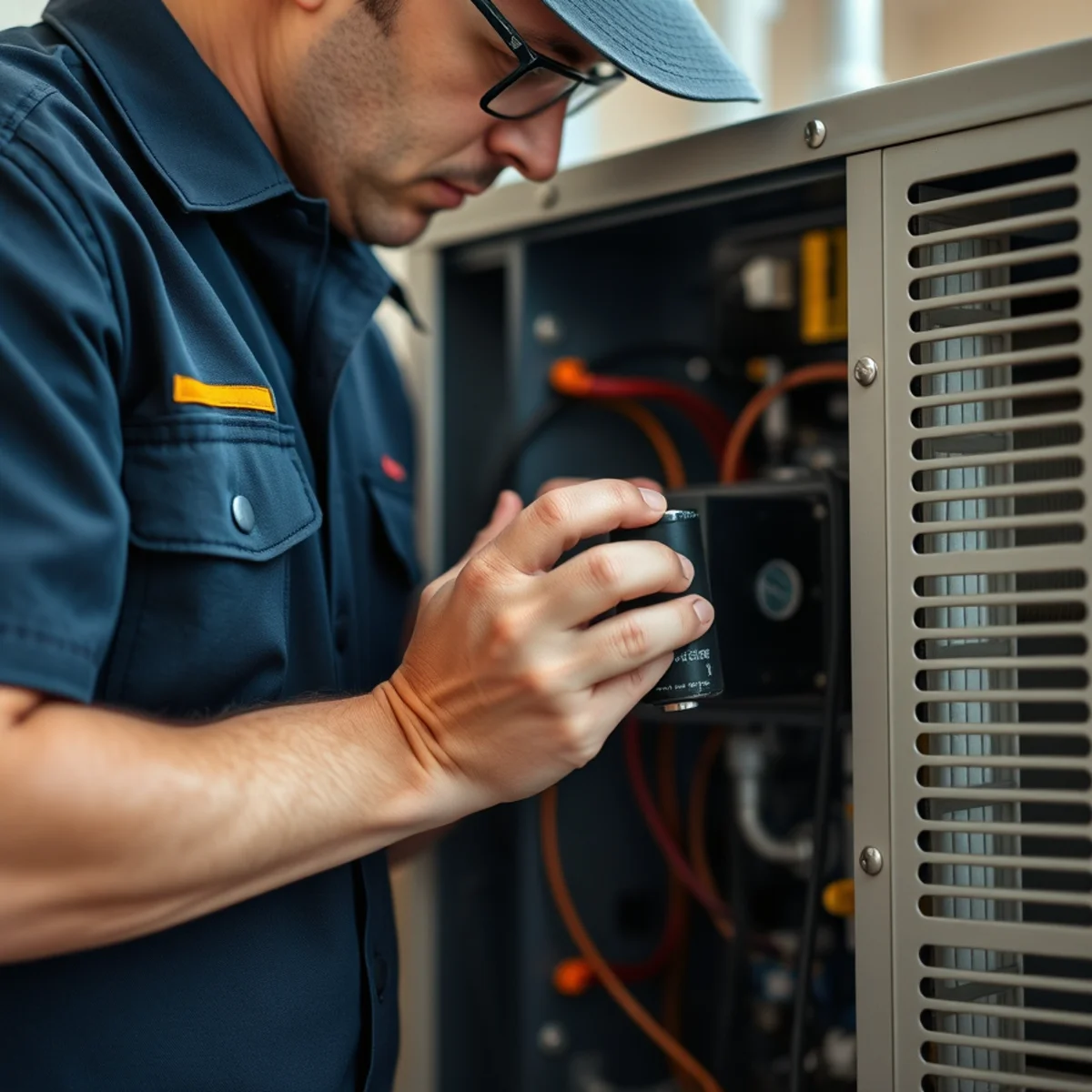
What Our Capacitor & Contactor Replacement Includes
- Diagnostic to confirm the capacitor or contactor is the cause
- Testing of the part's actual electrical values, not a guess
- Up-front pricing before the replacement
- Replacement with a correctly rated capacitor or contactor
- Check for related issues so a deeper problem isn't masked
- Full system start-up and performance verification
Why Choose Flaming Ice
- We test the parts so you're not paying for a guess
- Often a fast, affordable same-day fix
- Honest — we won't dress up a cheap repair as a big one
- Owner-operated, same-day and weekend availability, text before we arrive
Owner-Operated Care
You deal with Travis and an accountable local team on every job.
Same-Day & 24/7
Fast same-day and weekend emergency service when comfort can't wait.
Honest, No-Upsell
Clear options and fair pricing — backed by 71 local reviews.
How Our Capacitor & Contactor Replacement Works
- 1Honest diagnosisWe inspect your system and pinpoint the real cause — no guesswork.
- 2Clear options & upfront priceYou see your options in plain English and approve the price before we start.
- 3Clean, careful workWe complete the approved capacitor & contactor replacement and treat your home with care.
- 4Tested before we leaveWe verify comfort, airflow, and performance, then walk you through it.
Our No-Surprise Pricing Promise
HVAC pricing shouldn't be a mystery. We explain what's going on, lay out your options in plain English, and get your approval before we touch a thing — so the price we quote is the price you pay.
Get an Honest Quote- A clear diagnosis before any work begins
- Upfront, written options — you approve the price first
- No hidden fees and no high-pressure upsells
- Honest repair-vs-replace advice for your budget
Related Services
AC Repair
Fast, honest air conditioning repair when your system blows warm air or quits in the NC heat.
Learn MoreBlower Motor Repair & Replacement
Diagnosing and fixing the blower motor that moves your air — fast, honest, and the same day when you need it.
Learn MoreEmergency HVAC Service
Same-day and weekend HVAC help when your heating or cooling quits and you can't wait.
Learn MoreCapacitor & Contactor Replacement Across North Carolina
We bring this service to Clayton and communities throughout the state.
Capacitor & Contactor Replacement FAQs
Very often, yes. A hum from the outdoor unit with the fan or compressor failing to spin is the classic sign of a weak or failed capacitor, which can't deliver the jolt the motors need to start. Turn the system off so the motor doesn't overheat and call us. We can usually test it and replace it the same day in Clayton.
The contactor is an electrical switch that decides whether power reaches your AC's motors. The capacitor stores and releases the burst of energy that actually starts those motors spinning. They sit inches apart in the condenser and depend on each other, which is why we test both rather than assuming the problem is just one part.
Our long, hot, humid summers mean your AC runs for hours every day, and heat steadily degrades capacitors. On top of that, the power surges from frequent NC thunderstorms commonly fry capacitors in an instant. Many no-start calls we get in Clayton come the morning after a storm.
In most cases, yes. We stock common capacitors and contactors on our trucks, so the majority of these repairs are completed same-day. We also offer weekend and emergency service because a dead AC in a Clayton heat wave shouldn't have to wait.
We strongly advise against it. Capacitors store 370 to 440 volts even after the power is off, which is enough to cause serious injury. A pro also tests the related parts and matches the exact microfarad, voltage, and amperage spec your system needs, so the repair actually lasts.
Yes. Flaming Ice is based at 356 N Farm Dr in Clayton, NC, and we serve Clayton, the greater Triangle, and surrounding North Carolina communities for capacitor, contactor, and other AC repairs. Call (327) 210-5999 and we'll let you know how soon we can be out.
The symptoms overlap — both can leave you with no cooling, humming, or clicking. A weak capacitor often causes struggling starts or a fan that won't spin; a bad contactor often causes clicking or a unit that won't get power at all. We test both with meters rather than guessing, so you only pay for the part that's actually bad.
Our long, hot summers run AC systems hard for months, and heat is the enemy of these parts. Capacitors weaken and swell over time, and contactors wear or get pitted from constant switching. They're among the most common AC failures we see, which is also why they're usually quick to replace once diagnosed.
Ready for Capacitor & Contactor Replacement?
Call Flaming Ice Heating & Cooling for capacitor & contactor replacement in Clayton, NC and across North Carolina.